
Practical AI: Turning Potential into Real Business Impact
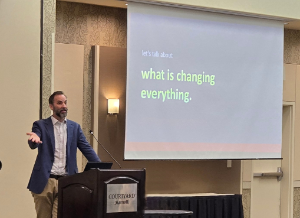 Presenting at the St. George Altabanking Insights breakfast recently, Dr. Aaron Davis, director of the Atwood Innovation Plaza at Utah Tech, claimed that AI is no longer theoretical—it’s already changing how work gets done.
Dr. Davis shared an example - a non-technical plumber who initially dismissed AI as hype, but later used Claude to create a tool to improve bidding. He completed the work in 15 mins. His reaction? “…I now have a custom built bidding tool that is connected to my website. AMAZING.”
There are many examples like our plumber friend. Even so, most businesses are only scratching the surface. The gap between what AI can do and what organizations actually use represents a major untapped opportunity and competitive advantage for those who act.
AI will change the nature of work. But you can argue that it won’t replace employees as much as it will change how they get work done. From that perspective changes will likely come in one of four ways:
- Generative Tasks – Using AI for writing, brainstorming, and summarizing. Individuals and teams shift from creating content to directing and refining AI-generated drafts.
- Agentic Workflows – Agents automate tasks and processes. People shift from executing work to designing systems that do so. Automation can be as simple as summarizing a daily schedule or email inbox, to more complex work like reviewing incoming contracts for specific language.
- AI-Built Solutions – Businesses using AI can build and deploy custom tools, applications, and dashboards more quickly. Many projects that used to require specific skills or outside contractors can be brought in house saving time and money.
- Human-Essential Work – Remember, AI is a tool. And not the one-size-fits-all type. People are needed to apply judgment and make decisions for many things. Again, AI won’t replace all, or even most, jobs. It will change how they’re done.
When thinking about how to use AI businesses should ask the following types of questions:
- Are we producing content?
- Are we running structured processes?
- Do we need a custom tool?
- Is the human element the core value?
The answers will guide businesses in terms of the types of work they want to apply AI to, and how they want to train employees to adapt.
In AI adoption perfect is the enemy of good. Most businesses are well-served by starting small – improve a few everyday processes or a repetitive workflow. Then grow from there.
It’s also important to note that there is no perfect AI tool. Each has their strengths and weaknesses. The good news is that they all offer free versions that let you test so you can find the one that works best for you and your business. Once done businesses should be ready to jump to a paid version, which typically offers more features and fewer limitations.
ABOUT THE AUTHOR
Stan Sorensen is Chief Marketing Officer at Altabank. He joined the bank in 2019, and has previous marketing and leadership experience in software and healthcare. When Stan is not in the office, he enjoys spending time in the mountains.
Stan Sorensen is Chief Marketing Officer at Altabank. He joined the bank in 2019, and has previous marketing and leadership experience in software and healthcare. When Stan is not in the office, he enjoys spending time in the mountains.